
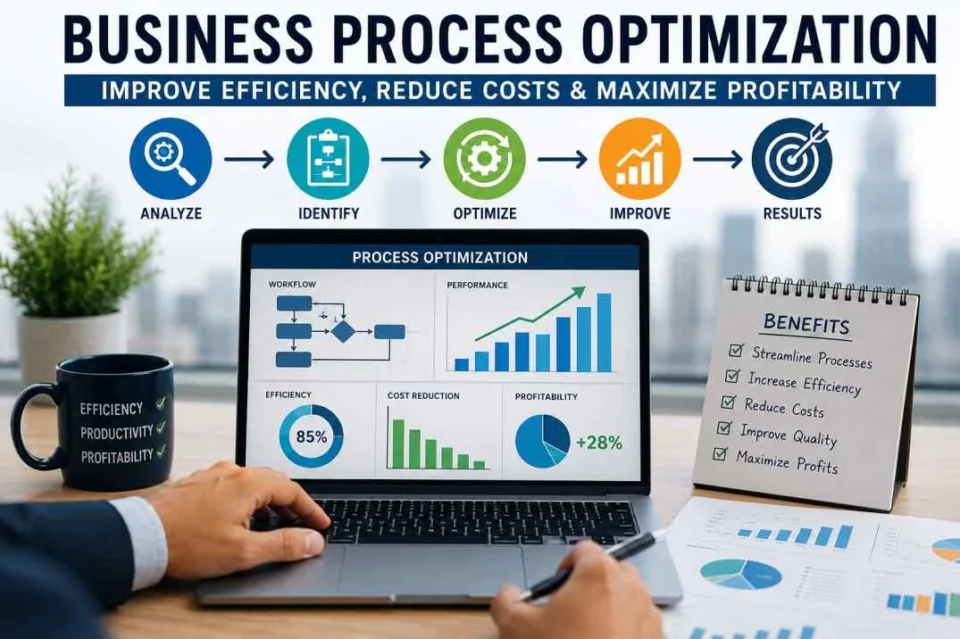
In an increasingly competitive global marketplace, operational efficiency is no longer just a tactical advantage; it is a fundamental prerequisite for survival and sustainable growth. Organizations across every industry continuously struggle with bloated workflows, communication silos, manual data entry errors, and redundant operational steps. These hidden inefficiencies quietly drain corporate resources, frustrate talented employees, and degrade customer satisfaction over time.
Business Process Optimization (BPO) offers a structured, strategic methodology for diagnosing organizational friction, refining daily workflows, and maximizing resource utility. Rather than executing random, surface-level cost cuts, business process optimization focuses on redesigning core processes to eliminate waste, accelerate output delivery, and improve quality standards.
By systematically evaluating how work flows across departments, forward-thinking enterprises can build resilient operational models capable of adapting quickly to changing market demands.
Understanding the Core Framework of Business Process Optimization
Business Process Optimization is the practice of analyzing existing business workflows, identifying bottlenecks or redundancies, and redesigning those operational steps to increase speed, lower expenses, and improve quality. It is a continuous effort rather than a one-time initiative, rooted in methodologies like Lean, Six Sigma, and Total Quality Management.
At its foundation, effective process optimization addresses three key operational pillars:
-
People: Ensuring team members have clear responsibilities, proper skill sets, and cross-departmental alignment without unnecessary administrative burden.
-
Process: Streamlining the logical sequence of actions, decisions, and handoffs required to transform raw operational inputs into valuable customer outputs.
-
Technology: Leveraging digital tools, modern software integrations, and intelligent automation systems to eliminate manual effort and enforce accuracy.
When an organization optimizes these three elements in unison, it creates an agile environment where routine operations run smoothly, allowing leadership to focus strategic focus on growth and innovation.
The Key Stages of an Effective Optimization Strategy
Successfully transforming complex operational workflows requires a disciplined, step-by-step approach. Rushing directly into solutions without fully understanding root causes often creates new operational problems elsewhere in the system.
Comprehensive Process Mapping and Baseline Analysis
Before modifying any workflow, teams must establish an accurate baseline of current operations. Process mapping involves creating detailed visual representations of every step, handoff, decision point, and system interaction involved in a specific operational chain.
During this initial discovery phase, it is vital to interview frontline employees who perform the daily tasks, rather than relying solely on high-level management assumptions. Frontline staff possess direct insight into hidden delays, workaround solutions, and recurring operational pain points that rarely appear in official training manuals.
Identifying Bottlenecks, Redundancies, and Waste
Once workflows are fully mapped, analysts evaluate each step through the lens of value creation. Activities are generally categorized into value-added, operational support, or non-value-added steps.
Common sources of process friction include:
-
Unnecessary Approvals: Multiple layers of management sign-offs that delay progress without adding meaningful oversight or quality control.
-
Manual Data Re-Entry: Transporting information manually between isolated software platforms, which increases labor costs and human error rates.
-
Information Silos: Isolated departmental communication channels that force teams to wait extended periods for necessary inputs from colleagues.
-
Task Switching: Requiring workers to jump between disparate tools and platforms, disrupting focus and slowing down overall throughput.
Redesign, Testing, and Implementation
After pinpointing root causes, operational teams draft an optimized process map. This redesigned workflow eliminates unnecessary steps, automates routine data transfers, and simplifies approval chains.
Before rolling out major process changes across an entire organization, companies should execute pilot programs within a controlled department or region. Testing new workflows on a smaller scale allows teams to monitor performance, collect real-time user feedback, refine system configurations, and fix unexpected glitches before full enterprise implementation.
The Strategic Role of Technology and Automation
Modern business process optimization relies heavily on digital technology to scale operational improvements. While technology alone cannot fix a fundamentally broken process, intelligent digital tools amplify the speed and accuracy of well-designed workflows.
Robotic Process Automation and Digital Workflows
Robotic Process Automation utilizes software scripts to handle repetitive, rule-based tasks such as invoice processing, data migration, and report generation. By delegating high-volume, tedious assignments to automated bots, businesses reduce operational costs, eliminate entry errors, and free up human staff to concentrate on high-value problem solving, strategic planning, and customer care.
Process Mining and Real-Time Operational Intelligence
Process mining technology analyzes event logs generated by enterprise systems like Enterprise Resource Planning software and Customer Relationship Management platforms. This provides real-time, data-driven visualization of how work actually moves through an enterprise, exposing hidden bottlenecks, deviations, and compliance risks that manual audits frequently miss.
Overcoming Common Organizational Barriers to Change
Implementing business process optimization inevitably encounters obstacles, with human resistance to change serving as the primary hurdle. Employees often view process modifications with skepticism or fear, worrying that automation might render their roles redundant or make daily work more difficult.
To overcome organizational resistance and ensure long-term adoption, leadership teams should incorporate clear strategies:
-
Transparent Leadership Communication: Articulate clearly why process changes are happening, emphasizing how new workflows will remove daily frustrations and support overall organizational health.
-
Cross-Functional Collaboration: Involve employees from all operational levels directly in the redesign process to build genuine ownership and buy-in.
-
Comprehensive Training and Support: Provide robust educational programs, step-by-step documentation, and hands-on support to help employees build confidence with updated software tools and procedural standards.
-
Continuous Feedback Loops: Establish open feedback mechanisms allowing staff to suggest incremental operational refinements post-launch.
Measuring Optimization Success and Fostering Continuous Improvement
Process optimization is not a project with a fixed end date; it is an ongoing cultural commitment to operational excellence. To evaluate the long-term impact of workflow redesigns, companies must establish key performance indicators aligned with strategic goals.
Common metrics for tracking optimization success include cycle time reduction, error rate drops, operational cost per transaction, capacity utilization, and employee job satisfaction scores. By reviewing these metrics regularly, leadership can identify new areas for refinement as the market evolves, ensuring the business remains lean, agile, and highly competitive.
Frequently Asked Questions
What is the difference between Business Process Optimization and Business Process Reengineering?
Business Process Optimization focuses on incrementally improving, streamlining, and refining existing workflows without completely tearing down core operational structures. In contrast, Business Process Reengineering involves a radical, complete overhaul of business processes from scratch to achieve dramatic performance breakthroughs.
How do companies decide which business processes to optimize first?
Organizations typically prioritize processes based on operational impact, strategic importance, error frequency, and execution cost. High-volume, repetitive, or customer-facing processes that generate frequent delays or high customer dissatisfaction are prime candidates for initial optimization initiatives.
Can small and mid-sized businesses benefit from process optimization?
Yes, small and mid-sized businesses often see rapid, dramatic returns from process optimization because they have leaner team structures and less institutional bureaucracy than large enterprises. Streamlining manual workflows allows growing companies to scale operations without immediately increasing administrative overhead.
What are the most common mistakes made during process optimization projects?
The most frequent mistakes include automating a broken process without fixing underlying logic issues, failing to involve frontline employees in workflow mapping, attempting to optimize too many processes simultaneously, and neglecting ongoing change management and staff training.
How long does a typical business process optimization project take?
The timeline varies depending on process complexity, company size, and scope. A targeted optimization initiative for a single department might take anywhere from 4 to 8 weeks, whereas enterprise-wide transformations spanning multiple locations can take several months to fully pilot, refine, and deploy.
What role do frontline employees play in optimization initiatives?
Frontline employees are crucial to success because they possess direct, practical experience with everyday operational realities. Their input during the mapping and discovery phases ensures that redesigned workflows account for real-world nuances, while their early buy-in reduces overall resistance to change.
