
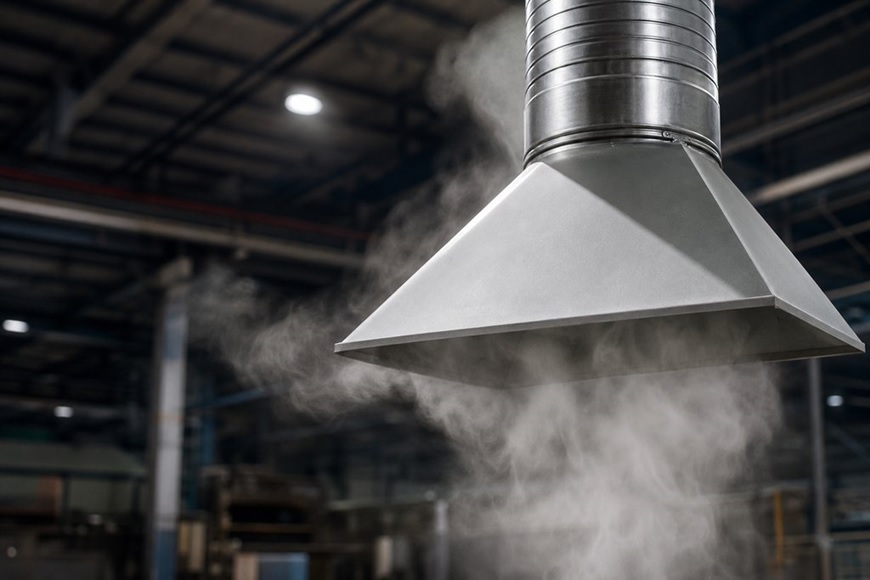
Oil mist, smoke, and fume problems can build up quickly, spreading throughout a facility and settling onto nearby objects and work pieces before many people realize the source of the problem. Effective control of mist, smoke, and odors starts at the source of the problem with effective air movement at the emission point, followed by effective air cleaning using a mist collector, fume filter, or smoke and dust collector.
Where Industrial Mist and Smoke Begin
Machines and processes that create mist or smoke in the workplace include, but aren’t always limited to:
- Metal working or machining that uses either water-soluble or oil-based cutting lubrication/coolants
- Brazing, cutting, welding
- Grinding, polishing, abrasive finishing, other material removal processes
- Thermal processing
- Pressing/forming
- Parts cleaning/washing
- Production processes that use excessive lubricants
Left unchecked, smoke, vapor, mist, or airborne particles (more details at https://science.nasa.gov/earth/earth-observatory/aerosols/) can spread beyond the initial problem area throughout your facility. Larger drops of oil or water-based mist will come out of the air stream relatively quickly, but a fine oil mist can stay in the air stream longer and travel greater distances. Vapor or smoke can also condense out on cooler surfaces. Contaminated air can also infiltrate your workforce’s breathing zones before visible evidence is apparent.
Oil mist or other airborne residue will settle out on floors, finished goods, machine controls, electrical control cabinets, stored goods, lighting fixtures, and just about any other horizontal or vertical surface it can find. The resulting grime, odors, slippery surfaces, and reduced visibility will increase cleaning requirements, reduce product quality, and mask other visual indications of equipment wear, leaks, or other problems. Mist or smoke particulates landing on finished goods or sensitive production items such as painted or coated parts, precision-machined components, or final assembly can lead to product quality problems, rework, and rejection.
Why Does Source Capture Matter?
Effective mist, vapor, smoke, or particulate collection starts by controlling it as close to the source of the problem as possible. Hoods, enclosures, or other connections to a machine help to remove unwanted contaminants before they have a chance to infiltrate other areas of your facility.
It’s a common misunderstanding to think that if you have adequate airflow from a dust collector or other industrial air filtration equipment that it will pick up smoke, vapor, or mist no matter where in the facility the air collection point is. In actuality, the further you are away from the actual air capture point (in an open area), the less effective air movement there will be. For effective air quality control, your dust collector or mist collector must be matched to the problem.
In general, an effective collection system will be custom-fitted to the source of the problem. A variety of factors should be considered including, but not always limited to, the following:
- How/where mist or smoke is being discharged from a machine or process?
- Where will air currents from the process (hot or cool) take the smoke, dust, or mist?
- Where are air drafts or air currents that will interfere with effective capture?
- How often does an operator need access to the process/machine? Will the air collection hood/enclosure be opened, bypassed, or modified to accommodate production demands? (Fully-enclosed applications can significantly reduce the amount of airflow necessary to control airborne particulates, but only if left enclosed at all times!)
- What state will the material be in, such as smoke, oil mist, coolant mist, dust, or vapor?
Filtration as a Complete System
With a Matrix Systems approach, one should consider all of these factors, along with supplemental airflow into the application, maintenance considerations, makeup air, and many other factors, before recommending a mist collector or other air quality control equipment for a given application. This means not looking at any one piece of air quality control equipment as a standalone item, but rather a system comprised of several items working in concert.
Maintenance Keeps Capture Effective
- Regular monitoring of filter pressure drop
- Servicing/replacement or cleaning of filter media as needed
- Regular cleaning/inspection of collection hoods/ductwork
- Regular cleaning/inspection of coolant/oil collection or recovery items
- Regular inspection/servicing of fans, belts, motors, and controls as needed
Planning for Access and Disposal
Before finalizing your industrial air quality control plan, also consider where and how a mist collector or fume collector will fit into your existing production environment. Allow ample room around dust collector access doors or panels to allow a technician to safely replace or wash filters, service the mist collector or fume collector, or empty dust collection hoppers. Consider where and how recovered coolant/oil, which is discussed at this page, or other contaminants will be stored, recycled, or removed for disposal.
Finally, walk your plant or facility and witness your production process in order to pinpoint when, where, and why problems occur. Log production problems or operator complaints of poor visibility, increased airborne dust or oil mist, objectionable odors, or increased housekeeping requirements as it relates to certain times of the day, certain products, certain production runs, or specific machines/processes. Take note of existing equipment, production schedules, or other factors that may affect an industrial air filtration or collection project.
