
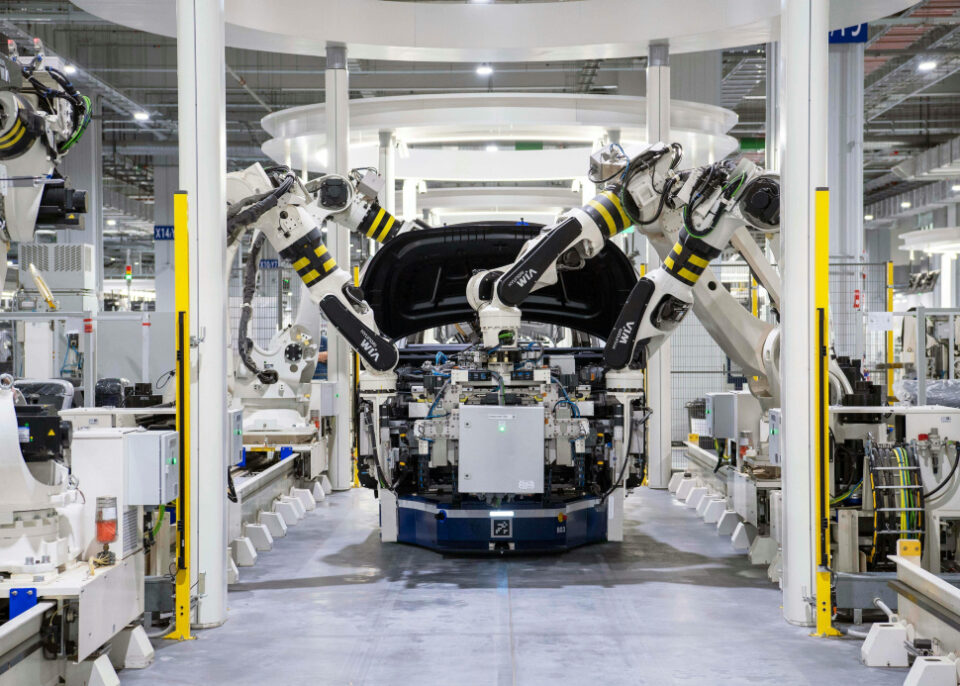
In an era defined by rapid technological evolution, shifting consumer expectations, and unpredictable global market dynamics, innovation stands as the single most powerful driver of industrial growth. Modern industry no longer operates in a landscape where standing still is an option. Companies that rely solely on historical success or traditional operational models quickly find themselves overtaken by agile competitors who leverage new technologies, creative business frameworks, and forward-thinking strategies.
Industrial innovation extends far beyond inventing new physical gadgets. It encompasses a holistic transformation of how products are designed, how supply chains are structured, how services are delivered, and how value is created for customers. By systematically fostering an environment of continuous improvement and creative problem-solving, modern industrial sectors can unlock unprecedented levels of productivity, sustainability, and market competitiveness.
Defining Innovation in the Context of Modern Industry
To understand its role in driving economic and structural expansion, one must look at innovation through a multidimensional lens. Industry experts generally categorize industrial innovation into four primary types:
-
Product Innovation: Developing entirely new goods or significantly improving the functional capabilities, materials, or software features of existing products.
-
Process Innovation: Re-engineering manufacturing techniques, supply chain workflows, and operational procedures to reduce cost, lower error rates, and increase output speed.
-
Business Model Innovation: Redefining how a business captures value and generates revenue, such as transitioning from selling physical machinery to offering machinery-as-a-service models.
-
Organizational Innovation: Implementing novel structures, management methodologies, and workplace cultures that encourage cross-functional collaboration and rapid experimentation.
When these distinct forms of innovation operate together, they create a compounding effect that accelerates overall sector growth and builds long-term economic resilience.
Primary Technological Drivers Transforming Industrial Sectors
The integration of advanced digital technologies into traditional manufacturing and industrial frameworks has fundamentally changed the pace of global industry expansion. Often referred to as the fourth industrial revolution, this digital convergence has turned static factories into dynamic, intelligent production networks.
Artificial Intelligence and Predictive Analytics
Artificial intelligence serves as the cognitive backbone of modern industrial innovation. Machine learning algorithms process massive streams of data generated by factory sensors, financial systems, and logistics networks to identify patterns that human operators might miss.
In heavy manufacturing, predictive analytics tools evaluate machine vibration, temperature variations, and acoustic signals to forecast equipment failures days or weeks before they happen. This proactive approach eliminates catastrophic breakdowns, extends the operational life of expensive capital assets, and saves millions of dollars in unexpected downtime costs.
Industrial Internet of Things and Autonomous Systems
The deployment of interconnected sensors across equipment arrays provides real-time visibility into every phase of the manufacturing process. Connected machinery continuously communicates operational metrics back to central control systems, allowing for automatic adjustments that optimize energy usage, material flow, and cycle times.
Coupled with autonomous mobile robots and automated guided vehicles, modern warehouses and factory floors now operate with remarkable precision and speed. These systems handle hazardous materials, transport heavy components across facilities, and execute complex sorting operations, dramatically improving workplace safety while maintaining high throughput.
Sustainable Innovation and the Clean Industrial Transition
Industrial growth is no longer evaluated solely by financial metrics or volume output. Today, environmental sustainability and resource efficiency are central parameters of industrial progress. Regulatory pressures, rising resource scarcity, and heightened consumer demand for environmentally responsible products have made sustainable innovation an urgent strategic imperative.
Circular Economy and Resource Efficiency
Traditional industrial processes followed a linear model: extract raw materials, manufacture goods, use those goods, and discard the resulting waste. Modern sustainable innovation focuses heavily on circular economy frameworks designed to design out waste from the very beginning.
Manufacturers increasingly utilize advanced materials science to create biodegradable components, engineered composite materials from recycled feedstocks, and modular product designs that facilitate easy disassembly and component reuse. By minimizing reliance on virgin raw materials, companies lower input costs, protect themselves against volatile supply chain disruptions, and reduce their carbon footprint.
Energy Transition and Green Manufacturing Processes
The shift toward renewable energy sources, industrial electrification, and carbon capture technologies represents another significant dimension of process innovation. High-energy sectors such as steel production, chemical manufacturing, and cement processing are actively redesigning core chemical and mechanical processes to utilize green hydrogen and clean electric power. These innovations allow heavy industries to scale up production while cutting greenhouse gas emissions, positioning them for success in a low-carbon global economy.
Fostering a Corporate Culture of Innovation
Technological investments alone cannot guarantee sustained industry growth. The true catalyst behind long-term innovation is human capital and organizational culture. Establishing a workplace environment that encourages calculated risk-taking, continuous learning, and creative problem-solving is essential for turning novel concepts into viable commercial realities.
Successful innovation cultures share several key features:
-
Empowerment of Interdisciplinary Teams: Breaking down functional silos between engineering, marketing, sales, and operations to foster diverse perspectives on complex problems.
-
Structured Experimentation Frameworks: Adopting agile methodologies and rapid prototyping setups that allow teams to test hypotheses quickly and fail safely on a small scale.
-
Continuous Reskilling and Up-skilling: Investing heavily in training programs to help existing workers adapt to complex digital systems, human-robot collaborative environments, and advanced software tools.
-
Open Innovation Architectures: Partnering with research universities, technological startups, industry consortia, and independent developers to accelerate internal research and development pipelines.
Overcoming Structural Barriers to Industrial Innovation
While the benefits of industrial innovation are undeniable, the journey toward comprehensive modern transformation carries notable challenges. Legacy equipment infrastructure, high capital requirements for emerging technology deployment, cybersecurity vulnerabilities, and deeply ingrained organizational inertia frequently delay progress.
To successfully navigate these hurdles, corporate leadership must adopt a phased, strategic investment vision. Rather than attempting a complete, overnight overhaul, leading enterprises launch targeted pilot projects, demonstrate measurable return on investment, and use those initial wins to build organizational momentum and justify broader technological expansion.
Furthermore, robust cybersecurity architectures must be built into new industrial platforms from day one. As operational technology networks become increasingly connected to cloud ecosystems, protecting proprietary intellectual property, industrial control systems, and customer data becomes critical to preserving long-term brand equity and operational continuity.
Long-Term Outlook for Industrial Expansion
The role of innovation in modern industry growth will only deepen as global challenges become more complex and technological capabilities expand. Companies that treat innovation as an ongoing strategic discipline rather than an occasional initiative will set the benchmark for operational efficiency, market relevance, and sustainable profitability. By uniting cutting-edge digital systems, green manufacturing principles, and adaptive human talent, modern industries can achieve unprecedented growth while building a resilient, sustainable foundation for the future.
Frequently Asked Questions
What is the difference between invention and innovation in an industrial setting?
An invention refers to the creation of a new device, process, or concept for the first time. Innovation goes a step further by successfully developing, refining, scaling, and applying that new concept commercially to solve practical problems, streamline operations, or generate market value.
How does process innovation directly impact an organization’s bottom line?
Process innovation improves the bottom line by eliminating operational waste, reducing energy and material consumption, shortening production cycle times, and decreasing costly manual errors. These operational improvements directly lower unit manufacturing costs and boost profit margins.
Why is open innovation becoming more popular among major industrial firms?
Open innovation allows established industrial companies to tap into external expertise, research, and emerging technologies from universities, specialized startups, and independent developers. This collaborative strategy speeds up the research and development cycle, reduces internal risk, and brings breakthrough solutions to market much faster.
What strategies help traditional companies overcome employee resistance to technological innovation?
Companies can address resistance to change through transparent communication regarding project goals, involving frontline staff in the design phase, demonstrating how new tools ease daily workloads, and providing comprehensive reskilling opportunities to boost employee confidence with new systems.
What small first steps can mid-sized manufacturers take to begin innovating?
Mid-sized manufacturers can start small by conducting an internal operational audit to identify primary bottlenecks, automating a single manual workflow, or installing basic IoT tracking sensors on a critical machine line to gather real-time performance data before embarking on larger digital transformations.
How do government policies and regulations influence industrial innovation?
Government policies shape industrial innovation through strategic research grants, tax credits for research and development activities, strict environmental standards that incentivize green technologies, and investments in public infrastructure like high-speed communication networks and educational training facilities.
